Banpo Site
Introduction
The Banpo Site, located in Xi'an, Shaanxi province, is one of the most significant prehistoric archaeological sites in the world. Discovered in 1953, the site is a testament to the Neolithic Yangshao culture, dating back approximately 6,000 years. The site offers invaluable insights into the social, economic and cultural practices of a matriarchal clan society that once thrived in the Yellow River basin. The Banpo Site is celebrated for its extensive array of artifacts, including pottery, tools and the remains of residential structures. The Xi'an Banpo Museum, built to preserve and showcase the discoveries from the site, is China's first museum dedicated to prehistoric settlements.
History
The history of the Banpo Site is deeply intertwined with the broader narrative of Chinese archaeology. In the spring of 1953, construction workers discovered colored pottery while building a thermal power plant, leading to the revelation of this historically rich site. The Banpo Site is indicative of a typical Neolithic settlement from the Yangshao Culture, known for its matriarchal social structure. This era, spanning from 7,000 to 5,000 years ago, marks a crucial period in the development of early Chinese civilization, characterized by advancements in agriculture, pottery and social organization.
Archaeological Excavations
Initial Discoveries
The initial excavations at the Banpo Site were instrumental in unearthing a plethora of artifacts and structural remnants that highlighted the sophistication of the Yangshao Culture. The site covers an area of approximately 50,000 square meters and has revealed a well-organized settlement comprising residential, pottery-making and burial areas. Excavations have uncovered 46 dwellings, over 200 storage pits, and numerous tools and implements, providing a comprehensive glimpse into the daily lives of the Banpo people.
Recent Developments
Recent archaeological efforts have continued to shed light on the Banpo Site, offering fresh perspectives on the technological advancements and cultural practices of its inhabitants. With the aid of modern technology, researchers have unearthed further details about the architectural techniques used in constructing dwellings and other structures. New findings suggest that the Banpo people engaged in complex ritualistic practices, evidenced by the discovery of public gathering spaces and artifacts such as pottery with symbolic decorations.
Architecture and Layout
Residential Structures
The residential structures at Banpo are characterized by semi-subterranean houses, which provided insulation against harsh weather. These dwellings were circular or rectangular, with thatched roofs supported by timber posts. The intricately designed structures reflect the community's understanding of construction techniques and their ability to adapt to environmental conditions.
Public and Religious Buildings
In addition to residential buildings, the Banpo Site contains evidence of public and potentially religious structures. These spaces likely served as venues for communal gatherings and rituals, underscoring the social cohesion and cultural practices of the Banpo community. The discovery of large meeting halls suggests the existence of organized societal systems and possibly early forms of governance or religious leadership within the settlement.
Artifacts and Material Culture
Pottery
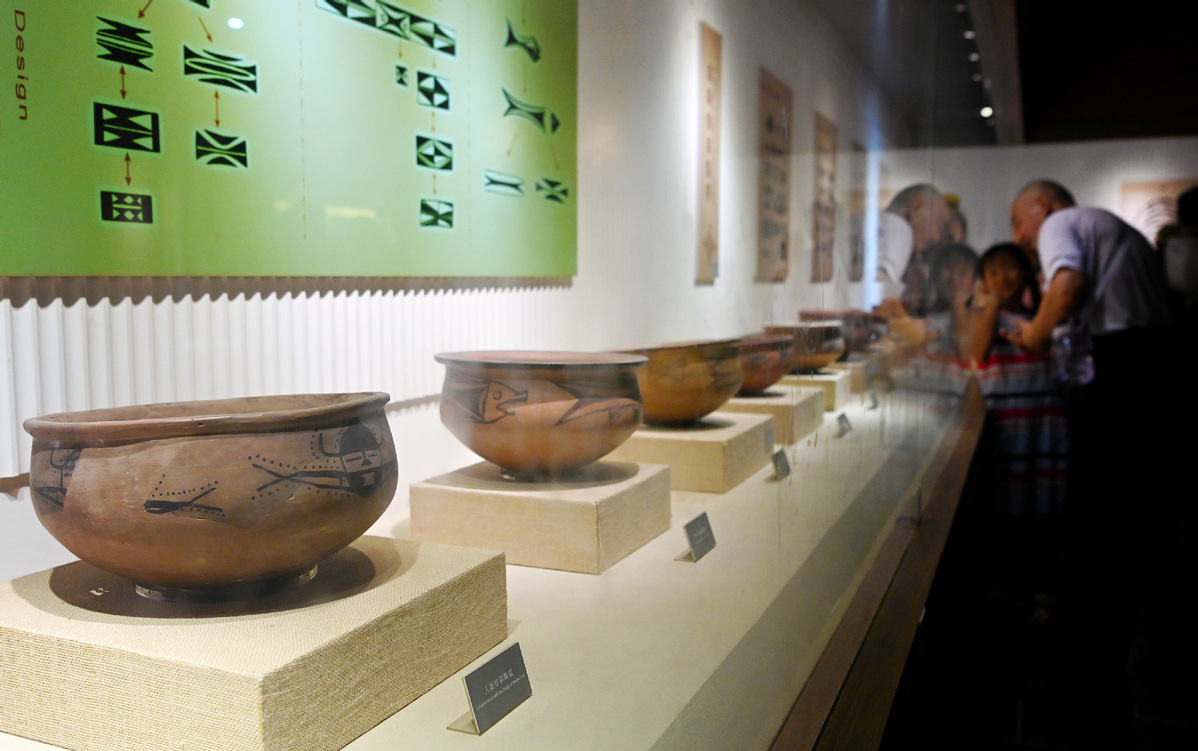
Pottery is one of the most distinctive features of the Banpo Site, with intricately designed and painted ceramics offering insights into the artistic endeavors and daily life of the Yangshao people. The pottery often features geometric patterns, animal motifs and symbolic decorations, which may have held cultural or spiritual significance.
Tools and Implements
The Banpo people utilized a variety of tools and implements made from stone and bone. These tools, including sickles, fishhooks and knives, were essential for agricultural, hunting, and domestic activities. The sophistication of these implements indicates a high level of craftsmanship and an understanding of functional design.
Significance
Cultural Importance
The Banpo Site holds immense cultural importance as it provides a window into the early stages of Chinese civilization. The site highlights the social organization, economic practices, and cultural expressions of a prehistoric community, contributing significantly to the understanding of China's rich cultural heritage.
Contributions to Understanding Neolithic China
The Banpo Site has been pivotal in enhancing the comprehension of Neolithic China. The discoveries made at Banpo have illuminated aspects of early Chinese society, including the transition from nomadic to settled life, the development of agriculture, and the emergence of social structures that would later influence subsequent Chinese cultures.
Preservation and Tourism
Preservation Efforts
Efforts to preserve the Banpo Site have been ongoing since its discovery, with measures in place to protect its invaluable artifacts and structural remains. The Xi'an Banpo Museum plays a crucial role in these efforts, providing a controlled environment for the preservation and display of artifacts.
Visitor Experience and Education
The Xi'an Banpo Museum offers a comprehensive educational experience for visitors, with exhibitions that detail the history, culture and archaeological significance of the Banpo Site. Interactive displays and guided tours enhance the visitor experience, making the Banpo Site an essential destination for those interested in the early history of Chinese civilization.








